
In early 2025, Nigeria joined a growing list of nations experimenting with sovereign stablecoins, launching its very own naira backed token: cNGN. Built for local payments, cross-b...
Published:
Source: Original X article/post

In early 2025, Nigeria joined a growing list of nations experimenting with sovereign stablecoins, launching its very own naira backed token: cNGN.
Built for local payments, cross-border trade, and crypto native commerce, cNGN promises price stability, digital convenience, and faster transactions. It is a signal that regulators in Africa's largest economy are beginning to explore blockchain beyond policy memos. For a country long dependent on USD remittances and unstable banking infrastructure, cNGN is a bold move.
But here's the thing.
cNGN isn't just a product. It's a teachable moment.
It's an opportunity to revisit what stablecoins really are, how they work, and why some forms of backing are far more resilient especially for countries like Nigeria where trust, inflation, and currency volatility define the daily financial experience.
To understand where cNGN fits, and what could come next, let's start with the basics.
What Are Stablecoins?
Stablecoins are digital assets designed to maintain a stable value, usually pegged to a fiat currency like the dollar or naira. They offer the transaction speed and programmability of crypto, without the volatility of assets like Bitcoin or Ethereum.
They've become the backbone of decentralized finance, cross-border trade, savings protocols, and onchain payments. Globally, stablecoins now settle trillions of dollars per year often quietly in the background.
But not all stablecoins are built the same.
Types of Stablecoins
There are three dominant models of stablecoin design:
1. Fiat Backed Stablecoins
These are pegged to a fiat currency and backed 1:1 by cash or reserves in a bank account. Think USDT, USDC, and now, cNGN.
2. Crypto Backed Stablecoins
These use crypto assets (like ETH or BTC) as collateral, often with over collateralization. The most notable example here is DAI.
3. Algorithmic Stablecoins
These use code to dynamically adjust supply and demand. Famously, UST/LUNA collapsed in 2022, nearly erasing confidence in the model.In practice, fiat backed and crypto backed have endured. But even among these two, trust models vary widely and that matters.
The Problem with Fiat Backed Stablecoins
On paper, fiat backed stablecoins like cNGN seem straightforward: for every token in circulation, the issuer holds one naira in reserve. The catch? It only works if you trust the issuer, the regulator, and the custodian holding those naira reserves.
In Nigeria, where the naira has lost over 40% of its value in the last 12 months, and FX restrictions have choked access to USD, that's a big leap of faith.
Fiat backed stablecoins can also be paused, restricted, or frozen sometimes with a simple message from the central bank or financial authorities. They may be stable in price, but not in principle.
Crypto Backed and Bitcoin-Backed: A Better Path
Now imagine a stablecoin backed directly by Bitcoin. Not a dollar. Not the naira. But by the most secure, decentralized, and censorship resistant monetary asset ever created.
That's the promise of Bitcoin backed stablecoins and where platforms like @Citrea_xyz and and it's incubated stablecoin @nectraxyz begin to change the game.
Unlike fiat backed coins, Bitcoin backed stablecoins derive their value from on chain collateral. They can be minted and redeemed transparently, without reliance on banks, middlemen, or political decisions.
And because they use zk-proofs and Bitcoin rollup architecture, they scale securely, maintain privacy, and can settle in finality on Bitcoin's L1.
This isn't theoretical. It's an emerging design being built on Citrea the first zero-knowledge rollup for Bitcoin.
Why This Matters in Nigeria
In Nigeria, stablecoins are already a lifeline.
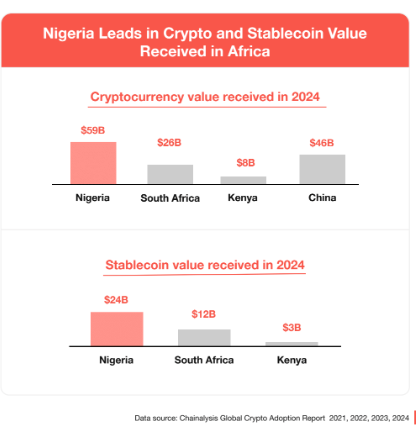
$24B in stablecoin volume flowed into the country in 2024 alone, people use them to hedge inflation, store value, and send cross-border payments. They're accepted more easily than local bank transfers in many online communities
But pegging them to the naira or relying on traditional financial actors to hold the reserves brings the same risks that crypto was built to avoid.
Bitcoin backed stablecoins don't just replicate fiat digitally. They offer a new kind of programmable trust:
- Resistant to devaluation and seizure
- Transparent and auditable by anyone
- Global by default
- Governed by code, not policy shifts
For developers building savings protocols, remittance tools, or decentralized ID systems, this opens a new paradigm; one where trust is not issued but proven.
Citrea Leads This Shift
Citrea is designed for exactly this use case: to enable smart contracts, ₿apps, and stable assets that settle directly on Bitcoin with zk-proofs for scalability and verifiability.
With Citrea, Nigerian developers can build Bitcoin-backed stablecoins that serve real people:
- Ajo-style community savings groups
- Cross-border settlement
- On-chain financial IDs
- Microloans with ZK credit scoring
All while avoiding the fragility of bank-custodied reserves.
This is not a theory. Citrea Nigeria is already working with devs across Enugu, Abia, and a growing list of states to make these applications real. A university tour is underway. Builder workshops are live. ₿apps are coming
The Future Is Backed by Bitcoin
cNGN is a good step. It brings the conversation home. But it also reminds us what's at stake.
In a world where currencies can collapse, platforms can censor, and regulators can reverse policy overnight, only one monetary layer has remained neutral, verifiable, and trusted by millions:
Bitcoin
And now, with platforms like Citrea, that trust can power programmable money not just speculation.
The future of stablecoins will not be decided by who can issue more tokens. It will be defined by what we choose to back them with.
Engr Ndiokwelu Nzube
Citrea Nigeria Lead & Founder Beaconsmith Collective

