
I attended our town union meeting as an adult for the first time yesterday, for the Enugu chapter. It was a remarkable experience. As an Nze na Ozo member, community building and p...
Published:
Source: Original X article/post

I attended our town union meeting as an adult for the first time yesterday, for the Enugu chapter. It was a remarkable experience. As an Nze na Ozo member, community building and preservation of cultural heritage are at the heart of my responsibilities. The Nze na Ozo title is not only a personal honor but also a call to serve the community, uphold justice, and foster unity.

In a turn of events I did not foresee, I was immediately voted in as the new secretary, Achina Town Union. Enugu Chapter with a Professor of Obstetrics and Gynecology as our new President.
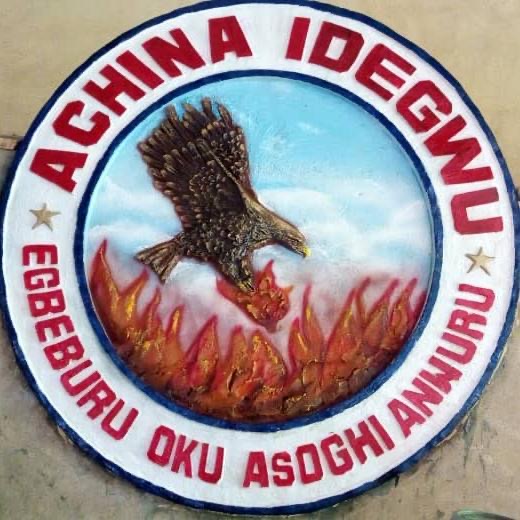
One of the first things I observed was a fundamental shift in approach; meetings that were previously held monthly are now held quarterly, and the new executive committee is unabashedly digital-first. It was a push I, as a leader, instinctively encouraged.
The moment was clarifying. For some time now, as a leader in the blockchain and AI space through the Beaconsmith Collective, ArtwaveDAO and leading Citrea’s Nigerian Community. I have been part of a conscious effort to build resilient systems. We have been gathering our leading individuals from our various micro-communities; developers, artists, creators, scientists and builders —to bring our collective knowledge, expertise, and resources to bear on the single most important challenge we face: contributing meaningfully to our local economy.

Sitting in that Achina Town Union meeting, seeing the readiness for change within one of our most traditional and trusted institutions, the two worlds collided. I saw the same desire for progress, the same push for efficiency, the same latent potential. The parallel was undeniable. Our traditional systems are ready for new tools, and our new systems must be built to serve our traditions. This is what led me to put these thoughts to paper, to articulate the work that lies before all of us.
We feel it in the market, in the price of fuel, in the rising cost of cement.
We feel it when we work tirelessly, only to find our savings have lost their strength by the end of the year. It is the silent, grinding weight of a financial system that is failing us. Not out of malice, but out of design. We feel it. We feel it in the market when the price of a bag of rice has changed again. We feel it at the filling station. We feel it when the quote the bricklayer gave you last month is no longer valid this month.
It is the silent, grinding weight of a financial system that is failing us. It feels like we are all working harder, running faster, just to find ourselves in the same place.
For generations, our people built systems of trust to survive this. The Isusu, the Ajo, the family meeting where we pool resources. The Town Union, the truest government we have, funding the projects that the "government" will not. These institutions are the bedrock of our society. They run on the currency of trust.
Our parents and their parents before them built systems of trust to fight this. They created the Isusu and Ajo, pooling their resources to build capital. They established the Town Unions, the bedrock of our communities, to fund the projects that government could not.
These institutions are beautiful. They are ours. They run on the currency of trust.
But they are forced to operate on a currency that leaks.
The Naira
Every day, the Naira in the union bank or first bank account, the money saved for the new hospital, the funds gathered for youth empowerment—it loses a small piece of its soul to inflation. We are building our most cherished dreams on shifting sand.
And so, the work before us is not to abandon our systems of trust, but to give them a solid foundation to build upon.
The work before us is to connect our communities to a new monetary standard. One that does not leak. One that cannot be devalued. A foundation of digital rock.
That foundation is Bitcoin.
Forget the noise, the confusing charts, the hype. We must see it for what it is: the first savings technology in human history that is owned by no one, controlled by no government, and available to anyone with a phone. It is a neutral ground for the world to build upon.
And for us, it is a tool of economic liberation.
Think of the family saving for a plot of land. Today, their target is a moving one, as the price of land outpaces their savings. What if they could save in a currency designed to preserve its purchasing power? Their hard work would finally count for its full worth. Their dream would move closer, not further away.
Think of the Town Union. They pass a levy for a new borehole, a project of survival. They collect the funds. But by the time they are ready to drill, the money is no longer enough. The project stalls. Morale fades.
Crowdfunding and infrastructure development can now be powered by our diaspora networks. With transparency and digital accountability, we can fund projects that matter—from schools and clinics to roads and water supply—ensuring every contribution is tracked and every voice is heard.
Now, imagine that union, with the consent of its people, places a portion of its project treasury in Bitcoin. The funds are no longer a melting ice cube. They are a seed. When the time comes, the value is there. The borehole is drilled. The community drinks clean water. Trust in the leadership is strengthened. Progress becomes real.
Think of our brothers and sisters in the diaspora. They work to send support home, but a network of fees and slow processes takes a heavy cut. It is a tax on their love. Bitcoin allows them to send value directly home, in minutes, for pennies. It is a direct line of support, with no gatekeepers taking a share.
These are not fantasies. These are concrete possibilities. But they will not build themselves.
Now, some will tell you about the price shaking up and down. They are not wrong. But they mistake the price of dollars on the street for the value of the dollar itself. We know the price can change daily, but we also know the direction it has been going against the Naira for years. Bitcoin is like that. It may tremble, but the sand we are currently building on is guaranteed to wash away. We must choose a solid foundation, even if it shakes sometimes, over the certainty of sinking.
The Ramps We Must Build
This digital land is useless if our people cannot access it. This is where the work truly begins for our builders, our tech geniuses. We must build the ramps.
1. The Digital Kọlọ: We need a simple app—an Isusu 2.0—that we can use. A digital savings box (kọlọ) where they can put ₦2,000 every week. Not into Naira that will be worth less next year, but into Bitcoin that will hold its power. Deposit Naira, save in Bitcoin, secured on Bitcoin. So when it’s time to pay school fees, the full value of their sweat is there.
2. The Sovereign Union Fund: Imagine our Town Union treasury, not sitting in a bank account losing value, but as a protected fund. The money for the new borehole or to fix the road to the Eke market doesn't shrink. The project gets done. We see the streetlights turn on for the first time. We feel the pride of a promise kept. That is what this technology enables.
3. The Diaspora Direct Line: Our people abroad are taxed for their love. Stablecoins have broken down barriers. We must build the platforms that let them send money directly to their family’s phones in minutes. No more losing 10% of the value. The full blessing arrives.
Building the Ramps: A Mandate for the Bitcoin Builders of Nigeria
1. Build for the Collectives; The Town Union, Not Just the Individual. The town union, the age-grade association, the market cooperative—these are our original DAOs. They are trusted, they have governance, and they manage community treasuries. Don't try to replace them. Build tools for them. Create simple, secure, multi-signature treasury management apps that allow them to save a portion of their dues in Bitcoin, protecting their collective wealth from inflation and giving them a stable foundation for long-term projects.
2. Solve the "Three Rs": Remittances, Reserves, and Rewards. Focus on the problems that affect everyone.
- Remittances: Build the platforms that make sending money home from abroad instant and virtually free. This is the single most powerful way to demonstrate value.
- Reserves: Create the "auto-save" apps that help individuals and small businesses convert small, regular amounts of Naira into a long-term reserve asset. Protect our people from the silent tax of inflation.
- Rewards: Integrate Bitcoin as a reward mechanism for local commerce. A cashback in sats at a local restaurant is a powerful, viral marketing tool for both the merchant and for Bitcoin itself.
3. Simplicity is a Moral Obligation. The average user does not care about "hashrate" or "mempool." They care about whether their money is safe and easy to use. Our user interfaces must be ruthlessly simple. A 65-year-old aunty in the village should be able to use your app as easily as she uses WhatsApp. If it requires a seminar to explain, it has already failed.
4. Embed Education Into the Code. Your app is the classroom. Don't link out to a blog; build the lessons right into the user experience. Use simple, interactive explainers for every step. Show users why self-custody matters by making the process intuitive. Explain volatility not as a bug, but as a feature of a young, powerful asset, and show how consistent saving (DCA) is the antidote.
5. Think in Ecosystems, Not Just Products. Your savings app is the first step. The next is to build the ecosystem around it. How can that saved Bitcoin be used as collateral for a loan from the town union? How can a local merchant easily accept payment from your app? How can you create a directory of local businesses that are part of this new circular economy? Connect the dots. Build the network.
This is our work. To build the tools that empower our existing communities. To create financial infrastructure that serves our people, not the other way around. To forge a new path where our wealth is secure, our capital is productive, and our future is in our own hands.
The tools are open-source. The need is undeniable. The time is now.
Let's build.
Nze Nwaezechinemelu
~The Beaconsmith

