
The decay of a society’s principles is often invisible, a slow erosion of standards happening just beneath the surface. In my last reflection, I spoke of this half-life—the quiet p...
Published:
Source: Original X article/post
The decay of a society’s principles is often invisible, a slow erosion of standards happening just beneath the surface. In my last reflection, I spoke of this half-life—the quiet process by which a society unlearns its truths, replacing the bedrock of knowledge with the shifting sands of hustle.
There’s a strange quiet that follows a loud defection. Banners change, slogans are exchanged like jerseys at the end of a match, and suddenly, what was yesterday’s creed becomes today’s heresy. Yet after the music fades and the posters peel, we are left with a simple, unsettling question: when the colours change, what remains?
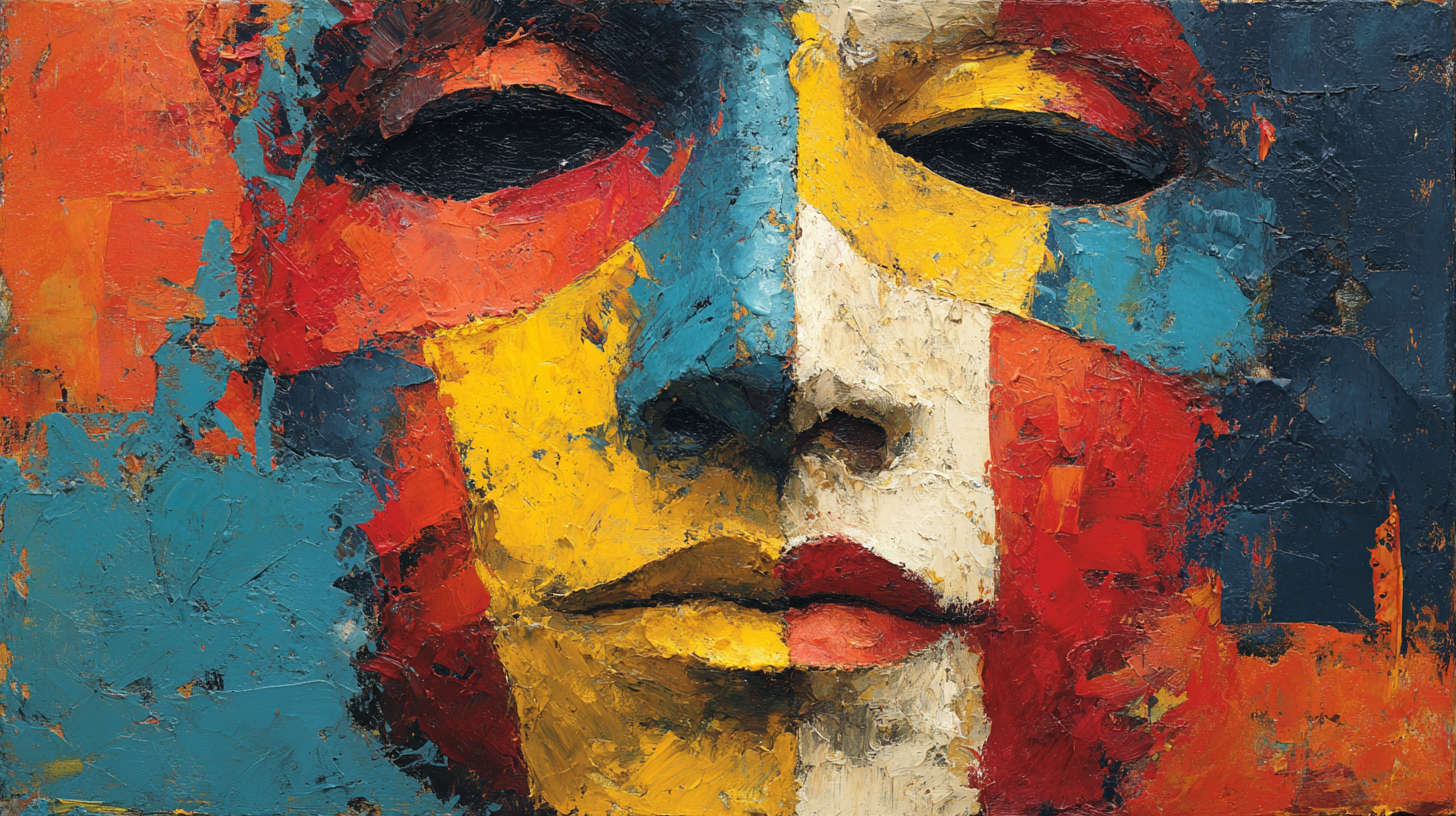
Our society wears this question on its face. The spectacle is not the motion itself, but the frictionless ease with which it occurs. We are witnessing a crisis not of ideology, but of identity. The political actor is no longer a vessel of belief, but a weather vane, perfectly calibrated to spin in the direction of the prevailing wind. His skill is not conviction, but calculation. His currency is not loyalty, but relevance.
When a man can change his flag so easily, we must ask if he ever truly had a country. This is not a question about politics. It is a question about the soul.
The Echo in the Conscience
There is a line in a song, a desperate late-night confession: “What do I stand for? Most nights, I don’t know anymore.”
That lyric is the unofficial anthem of our time. The crisis on the public stage creates an echo in the private soul. We see a void of conviction in our leaders because we have tolerated it, and perhaps even cultivated it, in ourselves. We mistook flexibility for wisdom and pragmatism for strength. Now we live in the world we built: a world where nobody is surprised by betrayal, only by steadfastness. Loyalty is now so rare it is treated as a form of naiveté.
To stand for something in a season like this is to accept a different arithmetic. You lose the convenience of applause and the comfort of being carried by the crowd. But you gain something rarer than victory: coherence. A life that rhymes with itself.
The Call to Take a Stand
The song continues with a challenge born of desperation: “This is war… why don’t you break the rules already?”
It feels that way. It feels like the old rules of integrity and allegiance have been suspended. But the invitation to “break the rules” can be read in two ways. One is the cynical path: abandon all principle and join the scramble. The other is more revolutionary: break the new rule that says you must stand for nothing. Courage is costlier. It is the quiet, internal act of rebellion against the rule that says you must stand for nothing. It is the decision to be an anchor in a society of weather vanes (anywhere belle face).
This is the real war. It is not between parties, but between two postures toward life: the posture of the weather vane, which spins to survive, and the posture of the anchor, which holds to endure.
To take a stand, then, is not about being louder or more strident. It is the quiet, internal act of rebellion. It is the decision to have a non-negotiable core, to know your own principles so intimately that the marketplace of easy allegiances loses its allure. It is the difficult, daily work of becoming a person who is harder to lead astray. A city of anchors can withstand any storm; a city of weather vanes is just a storm unto itself.
So here is a modest, stubborn hope: that in a season when so many switch colours, we will choose contours—formed by principle, not by trend. That we will practice integrity at small scales until it becomes culture at large scales.
Parties will rise and fall. Coalitions will rearrange. But a city that remembers what it stands for—truth over theatre, service over spectacle, dignity over deal-making—will not be swept away.
When the colours change, let the outline remain. And let that outline be us.

